
Lesson 3 of Matn al-‘Ashmawiyyah – Purification and Types of Water

Lesson 3 of Matn al-‘Ashmawiyyah – Purification and Types of Water
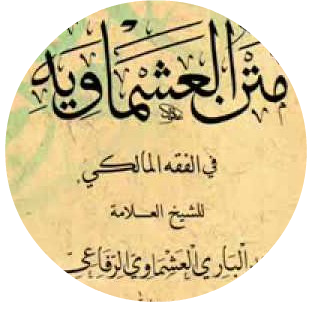
Matn al-‘Ashmawiyyah

21st June, 2017

Aqsaam ul-miyaah allati yajuzu minh al-wudu
(The types of water which are permissible to use for wudu)

This is a course taught by Ustadh Abdus Shakur Brooks covering the entire text. This text covers the essentials of purification, prayer and fasting according to the Mālikī school.

Matn

al-‘Ashmawiyyah.

Purification – Types of Water

You can download an MP3 of this lesson here: Lesson 3 – Purification and Types of Water

You can download a PDF of the english text here: Matn al-Ashmawiyyah


Lesson Notes:

Know, and may Allah the Exalted grant you success, that water is of two types, mixed water and unmixed water.

Unmixed water is tahuur (pure). It is absolute water which is permissible to use for wudu, whether the water descended from the sky or sprung from the earth (boreholes, wells, etc).

 Mixed water is water which due to this mixing changes in one of three qualities; color, taste or smell, and this is divided into two:

1. It is water which becomes mixed with impurity and causes it to change (color, taste or smell). This water is impure and it is not suitable to use for wudu. However, if the impurity does not cause it to change and that the water is little in amount and the filth also is of little in amount; in this case, it is disliked to use it for wudu according to the mashhuur (the prominent position in the madhhab)1

2. It is water which is sometimes mixed with something pure and that pure substance changes the water. If that pure substance is something which can be separated or prevented from being mixed with the water, like water mixed with saffron, roses and dough or anything like that, then this water is pure in its essence but it is not purifying. Nonetheless, it can be used for other usual things like cooking, baking, drinking and things like that but it cannot be used for worship i.e. wudu or anything of that sort. If it is mixed with that which cannot be avoided or prevented from it, like water which has being changed by salt or mud or things like that, or by arsenic, sulphur or things of such a nature, then this kind of water is pure and permissible for wudu.

And Allah knows best.

Footnotes:

1 It is disliked to use this type of water in the presence of cleaner water. But if that is the only water left then, in that case, there is no harm.
40 HADITH

The 40 Hadith, compiled by Imam Nawawi

JUZ ‘AMMA

A resource to help you memorise Juz ‘Amma

TAJWEED

Learn Tajweed with Shaykh Yasir Qadhi

Lesson 2 of Matn al-‘Ashmawiyyah – Purification and Things Which Nullify Wudu

Lesson 2 of Matn al-‘Ashmawiyyah – Purification and Things Which Nullify Wudu

Matn al-‘Ashmawiyyah

19th June, 2017

Nawaaqid ul-wudu1

(Things Which Nullify Wudu)

This is a course taught by Ustadh Abdus Shakur Brooks covering the entire text. This text covers the essentials of purification, prayer and fasting according to the Mālikī school.

Matn

al-‘Ashmawiyyah.

Purification – Things That Nullify Wudu

You can download an MP3 of this lesson here: Lesson 2 – Purification and Things Which Nullify Wudu

You can download a PDF of the english text here: Matn al-Ashmawiyyah


Lesson Notes:

Know, and may Allah grant you success, that things which nullify wudu are of two types:

1. Ahdaath2 (Impurities)
2. Asbaab ahdaath3 (Things which lead or may cause impurities).

Ahdaath (Impurities) are five:

Three of them are from the front (genitals):

1. Madhyu (Prostatic fluid)4
2. Wadyu (Genital discharge)5
3. Bawl (Urine)

And two of them are from the behind:

1. Ghaa’it (excrement)
2. Riyh (passing wind)

Asbaab ahdaath (those things which may cause or lead to impurities):

1. Sleep is of four types.

 Long and heavy sleep nullifies wudu,
 Short and heavy sleep also nullifies wudu,
 Short and light sleep does not nullify wudu
 Long and light sleep, it is merely recommended to refresh wudu.

2. Fainting.
3. Vanishing of intellect due to insanity.
4. Drunkenness.
5. Apostasy.
6. Doubt, whether or not one has wudu.
7. Touching the penis with the palm of the hand, the insides or the sides of the fingers, even if by one finger6.

As for touching (the opposite sex)7 it is of four types:

1. If pleasure is intended and thus found, wudu is nullified
2. If pleasure is found but was not intended, wudu is nullified,
3. If pleasure is intended but not found, wudu is nullified
4. If pleasure is not intended and indeed not found, in this case, wudu is not nullified.

It does not nullify wudu:

1. To touch the (your) buttocks
2. To touch the (your) testicles
3. To touch the genitals of little kids when cleaning/changing them.
4. To vomit
5. To eat camel meat
6. Cupping and bleeding (as a therapeutic measure)
7. To laugh in salaah.
8. For a woman to touch her private part but it is said if she fondles she needs to make wudu.

And Allah knows best.

Footnotes:

1 Wudu is one of the conditions for prayer; there is no prayer without wudu (under normal circumstances). This is the ritual washing of specific limbs as commanded by Allah in Surah Ma’idah:6

“Oh you, who have believed, when you rise to [perform] prayer, wash your faces and your forearmsto the elbows and wipe over your heads and (wash) your feet to the ankles…”

2 Ahdaath (plural for hadath) are things which are absolutely impure in themselves. They immediately nullify wudu of a person from whom they emanate.
3 Asbaab ahdaath are not impurities in themselves but things which may cause or may lead to impurity.
4 Prostatic fluid is that liquid which appears when a person is aroused due to intimacy between the spouses or thoughts.
5 Wadyu (genital discharge) is a thick and whitish fluid which appears after urine.
6 This applies to a person touching his own penis, not a penis of someone else, as in a case of the doctor and also this refers to direct skin to skin contact. There is no harm if there is a veil or towel in between.
7 The opposite sex intended here, is one from whom pleasure (sexual arousal) can be derived as in a case between wife and husband or anyone whom Islam permits one to marry.

40 HADITH

The 40 Hadith, compiled by Imam Nawawi

JUZ ‘AMMA

A resource to help you memorise Juz ‘Amma

TAJWEED

Learn Tajweed with Shaykh Yasir Qadhi

Lesson 1 of Matn al-‘Ashmawiyyah – The Introduction

Lesson 1 of Matn al-‘Ashmawiyyah – The Introduction

Matn al-‘Ashmawiyyah

17th June, 2017

The work, Matn al-‘Ashmawiyyah, by the great scholar ‘Abd al-Baari al-‘Ashmaawiy ar-Rifaa’iyyu, is one of the most celebrated introductory texts in the Malik Madhhab. Traditionally, it was either this text or Matn al-Akhdari which were used as primers for beginners in the Maliki Madhhab, depending on where one was situated on the map. This text, Matn al-‘Ashmawiyyah, was more ideal in East Africa and the latter was more favored in the West, up to North Africa. This treatise explores aspects of worship by which a beginner absorbs enough to make his servitude to Allah correct.

This is a course taught by Ustadh Abdus Shakur Brooks covering the entire text. This text covers the essentials of purification, prayer and fasting according to the Mālikī school.

Matn

al-‘Ashmawiyyah.

Introduction

You can download an MP3 of this lesson here: Introduction

You can download a PDF of the english text here: Matn al-Ashmawiyyah

40 HADITH
The 40 Hadith, compiled by Imam Nawawi
JUZ ‘AMMA

A resource to help you memorise Juz ‘Amma

TAJWEED
Learn Tajweed with Shaykh Yasir Qadhi

Al-Murshid al-Mu’een – Lesson 2

Al-Murshid al-Mu’een – Lesson 2

Al-Murshid al-Mu’een

7th June 2017

Lesson 2 of Al-Murshid al-Mu'een

by Shaykh Hamza Yusuf | Al-Murshid al-Mu'een

You can download an audio here – Lesson 2

Al-Murshid al-Mu’een – the Concise Guide to the Basics of the Deen – is a widely recognised primary text for learning Islam in North Africa. In it the author, Sidi Abd al-Wahid ibn ‘Ashir, summarises in verse the three sciences of Islam, Iman and Ihsan. The first section of the poem deals with matters of creed. The second portion covers the pillars of Islam. The last portion deals with the science of spiritual development and behavioral refinement which was traditionally known as Sufism (Tasawwuf).

Sidi Abdul-Wahid b. Ahmad b. ‘Ashir died in the year 1040 AH. His text has been memorized and taught for the past 400 years by Malikis. The text possesses a wealth of knowledge and other benefits that the common Muslim cannot dispense with.

This is a course taught by Shaykh Hamza Yusuf.

Mukhtasar al-Akhdari – Lesson 2

Mukhtasar al-Akhdari – Lesson 2

Mukhtasar al-Akhdari

8th June 2017

Lesson 2 of Mukhtasar al-Akhdari

by Shaykh Rami Nsour | Mukhtasar al-Akhdari

You can download the audio here: Lesson 2

You can download a PDF translation here

Mukhtasar Al-Akhdari was written by Abdur Rahman Al-Akhdari a famous Maliki scholar of the 10th century A.H. This text covers purification of the heart, ritual purification and prayer. It also covers an extensive section on “how to correct the prayer” when one makes a mistake which is vital to arriving with certainty towards “perfecting the prayer”.

Mukhtasar Al-Akhdari provides the beginner with the fundamental obligatory knowledge of fiqh along with some very useful principles of fiqh.

This is a course taught by Shaykh Rami Nsour.

Mukhtasar Al-Akhdari was written by Abdur Rahman Al-Akhdari a famous Maliki scholar of the 10th century A.H. This text covers purification of the heart, ritual purification and prayer. It also covers an extensive section on “how to correct the prayer” when one makes a mistake which is vital to arriving with certainty towards “perfecting the prayer”.

Mukhtasar Al-Akhdari provides the beginner with the fundamental obligatory knowledge of fiqh along with some very useful principles of fiqh.

This is a course taught by Shaykh Rami Nsour.

Pin It on Pinterest